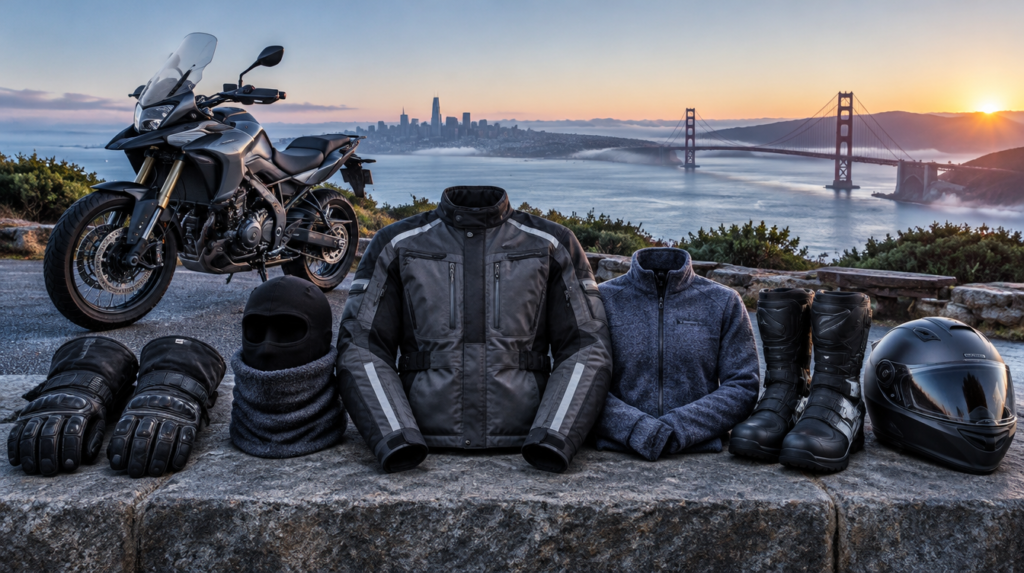
At 45°F on a motorcycle, comfort is not just a luxury. Moving air can make hands stiff, a cold core can distract you, and a fogged visor can erase the view you need. This checklist focuses on what the rider wears, not the bike-maintenance checks already covered in the site’s fall-prep guide.
Build the layers around the ride
- Base: Choose a close-fitting, moisture-managing layer. Avoid bulky fabric that bunches under protective gear.
- Middle: Add insulation for your core. A thin midlayer can be easier to adjust than one oversized jacket.
- Outer: Use a riding jacket and pants with protection and wind blocking appropriate to the conditions. Close vents and gaps at the neck, wrists, and waist.
- Hands: Choose gloves that keep fingers warm while preserving brake, clutch and switch feel. Test controls before you leave. Heated grips or gloves can help, but do not rely on heat to compensate for poor fit.
- Feet and neck: Warm socks, protective boots and a compatible neck covering reduce exposed gaps; keep anything near the helmet clear of its fit and fasteners.
- Vision: Check that the visor stays clear at stops and in motion. A compatible anti-fog insert or ventilation setting may help; stop safely if visibility deteriorates.
Before buying heated gear
Check the garment and motorcycle manuals for electrical compatibility, controller placement and cable routing. A battery-powered layer avoids a bike power draw but has finite runtime. Do not quote a universal wattage allowance: charging capacity and accessory loads differ by motorcycle.
Make the first few miles a test
Start with a short, low-pressure ride. If your hands stiffen, you shiver, or your visor will not clear, stop and adjust rather than pushing through. RevZilla’s winter-riding guide similarly calls out stiff hands and shivering as reasons to stop. Weather and wind can change; the number on a forecast is not the whole ride.
From the field
Riding in the San Francisco Bay Area has taught me to prepare for unpredictable weather. On a chilly morning, I prioritize gauntlet gloves, a balaclava with a thick neck gaiter, and a good riding jacket. I plan to add a layer if I need one. The point is to be ready when the conditions change.
The useful gear setup is the one that keeps you protected, able to operate the controls, and willing to turn around when conditions are worse than expected.