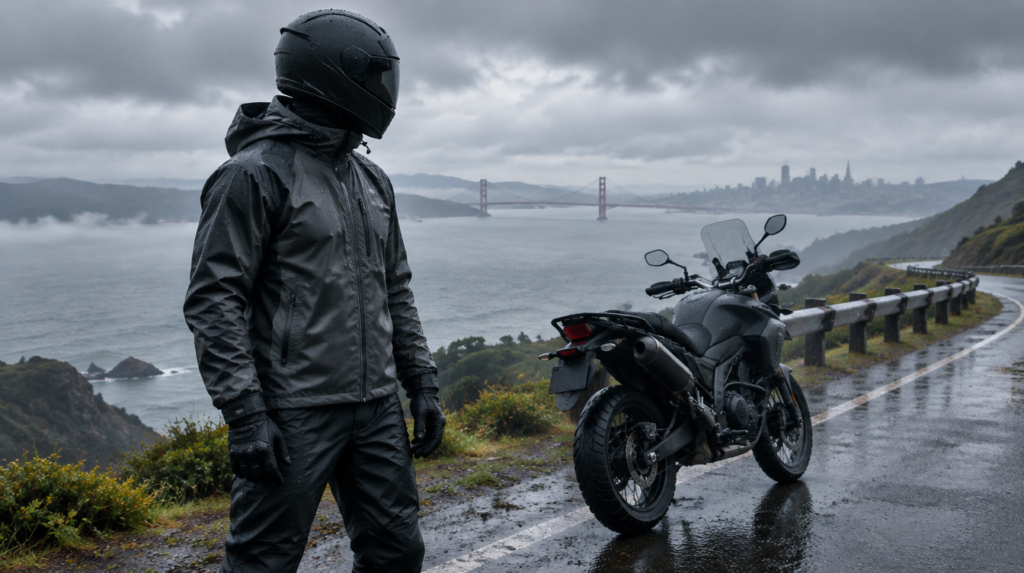
A Bay Area rain kit has to handle more than water. It has to fit over your protective gear, seal at the gaps, and be easy enough to use before the sky opens. The first buying decision is whether you need a packable shell over your existing gear or a waterproof riding jacket-and-pants setup you can wear every wet day.
Choose the system for the rides you actually make
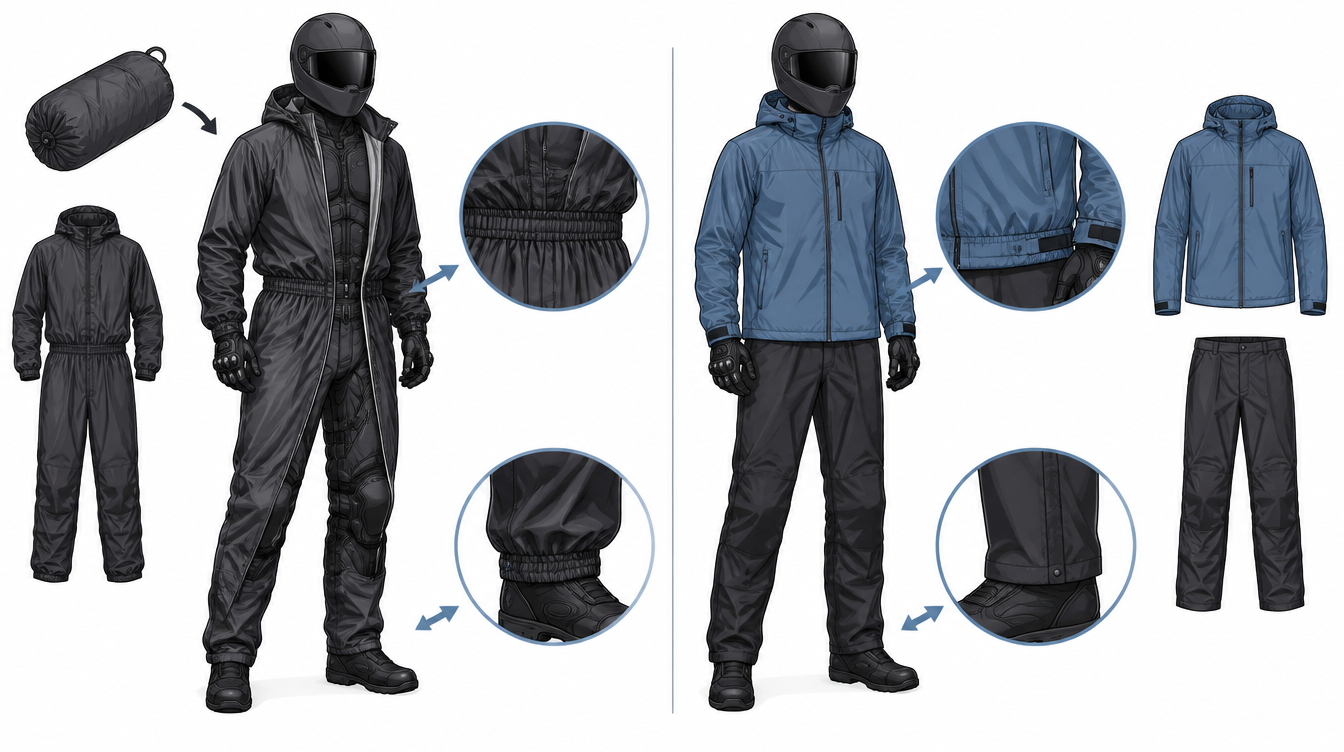
Packable oversuit: A practical backup for occasional showers or riders who already own protective, non-waterproof gear. A one-piece design reduces the waist gap, but can be awkward to get into at the roadside. A two-piece set is easier to mix and remove, but its jacket-to-pants overlap deserves attention. The oversuit is a weather layer—not a replacement for abrasion and impact protection underneath.
Waterproof riding jacket and pants: Better suited to frequent wet commutes or long days when you do not want to stop and change. Look for seam construction, storm flaps, cuff and collar closures, a secure jacket-pants overlap or connection, and armor that still sits correctly. A waterproof liner inside an outer shell may keep you dry while the shell becomes wet and heavy; an outer laminated shell manages that differently. Neither design is magically leak-proof if water enters at the neck, cuffs, or waist.
The fitting-room test
- Try the full setup over the armor and layers you will actually wear.
- Sit in a riding position: check that sleeves and legs still cover wrists and ankles, and that the back of the jacket does not ride up.
- Check whether cuffs, gloves, boots, and neck closure make a sensible water path. Ensure closures do not interfere with controls or movement.
- Look for sealed or taped seams, protected zippers, secure adjusters, and reflective details. Do not rely on a generic “waterproof” label alone.
- Pack and unpack it once. If an emergency shell takes too long to put on, it may stay in the bag until you are already soaked.
Motorcycle News’ tested waterproofs guide distinguishes oversuits from waterproof riding kit and highlights fit, ventilation and packability tradeoffs. Use its reviews as examples of test methods, not a promise that a particular product will fit you. I am deliberately not listing “best” model picks or prices without a current U.S. availability and fit check.
From the field
I’ve been using a BMW Namib jacket, and so far it has worked well for me. Before that, I carried a rain jacket I bought on Amazon, and that worked too. The detail I would check on either one is the front zipper: make sure it has a protective flap or another layer of coverage, so rain does not seep through and soak your chest.
The takeaway
If rain is occasional, begin with a properly sized, packable shell over protective gear. If wet riding is routine, a purpose-built waterproof jacket and pants may be worth the convenience. In both cases, solve the gaps at the neck, wrists, waist, and ankles before you trust a marketing claim.