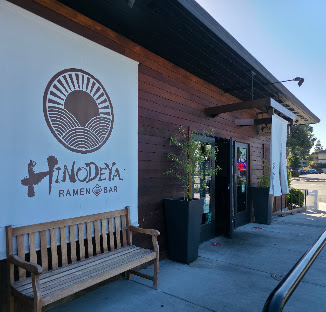
Most ramen shops in the Bay Area are chasing the same thing: a rich, heavy tonkotsu pork broth that coats the spoon. Hinodeya isn’t doing that, and it isn’t an accident. The broth in front of me — pale, creamy, almost delicate — comes from a family that’s been running ramen shops in Japan since 1885. That’s not a marketing number. It’s 141 years, four generations, one philosophy: the broth is dashi, not pork fat, and umami comes from layering ingredients, not boiling bones for two days.
📍 Hinodeya Campbell Town — 2210 S Bascom Ave, Campbell, CA 95008
📞 (408) 744-2155 · 🕐 Sun–Fri 11am–11pm, Sat 11am–10:30pm
🍜 Founded (Japan original): 1885, Hasuda, Saitama Prefecture — 141 years, 4 generations
🇺🇸 US expansion: Started San Francisco Japantown (2016) — now 9 locations, CA + TX
✅ Worth it: Yes — especially the Creamy Vegan Ramen
The History: 141 Years, Four Generations, One Broth Philosophy
Hinodeya’s story doesn’t start as a ramen chain — it starts as a neighborhood restaurant. In 1885, the opening of Hasuda Station on the new rail line between Omiya and Utsunomiya in Saitama Prefecture (just north of Tokyo) connected a small community to the rest of Japan and set off a wave of local growth. Hinodeya opened around that time as a family restaurant serving the area, and it’s been run by the same family — the Kuribaras — ever since.
The current chef and CEO, Masao Kuribara, is fourth generation. He’s a trained fine-dining chef and a certified sake sommelier, and when he talks about what makes Hinodeya’s ramen different, he doesn’t talk about noodles first — he talks about umami. “Every ingredient has its umami, but different ingredients have different umamis,” he told Hoodline when the first US location opened in San Francisco’s Japantown a decade ago. “Dashi has a particular kind of umami that we believe has a more powerful flavor.”
That’s the whole thesis of the restaurant: instead of a pork-bone tonkotsu broth (the style most Americans think of first when they hear “ramen”), Hinodeya builds its broths around dashi — a traditional Japanese stock made from bonito (skipjack tuna) and konbu seaweed, the foundational stock of Japanese cooking. It’s lighter, cleaner, and arguably harder to get right, because there’s nowhere for a bad batch to hide behind fat and salt.
Kuribara brought that recipe out of Japan and opened Hinodeya’s first US location in San Francisco’s Japantown in 2016. From there it expanded steadily and quietly — Union Square, the Financial District, Chestnut Street, then across the Bay to San Jose, Newark, and Campbell, plus outposts in Los Angeles and Dallas. Nine locations now, all still running the same dashi-first approach the family has used since the 1880s.
What’s Actually in the Bowl
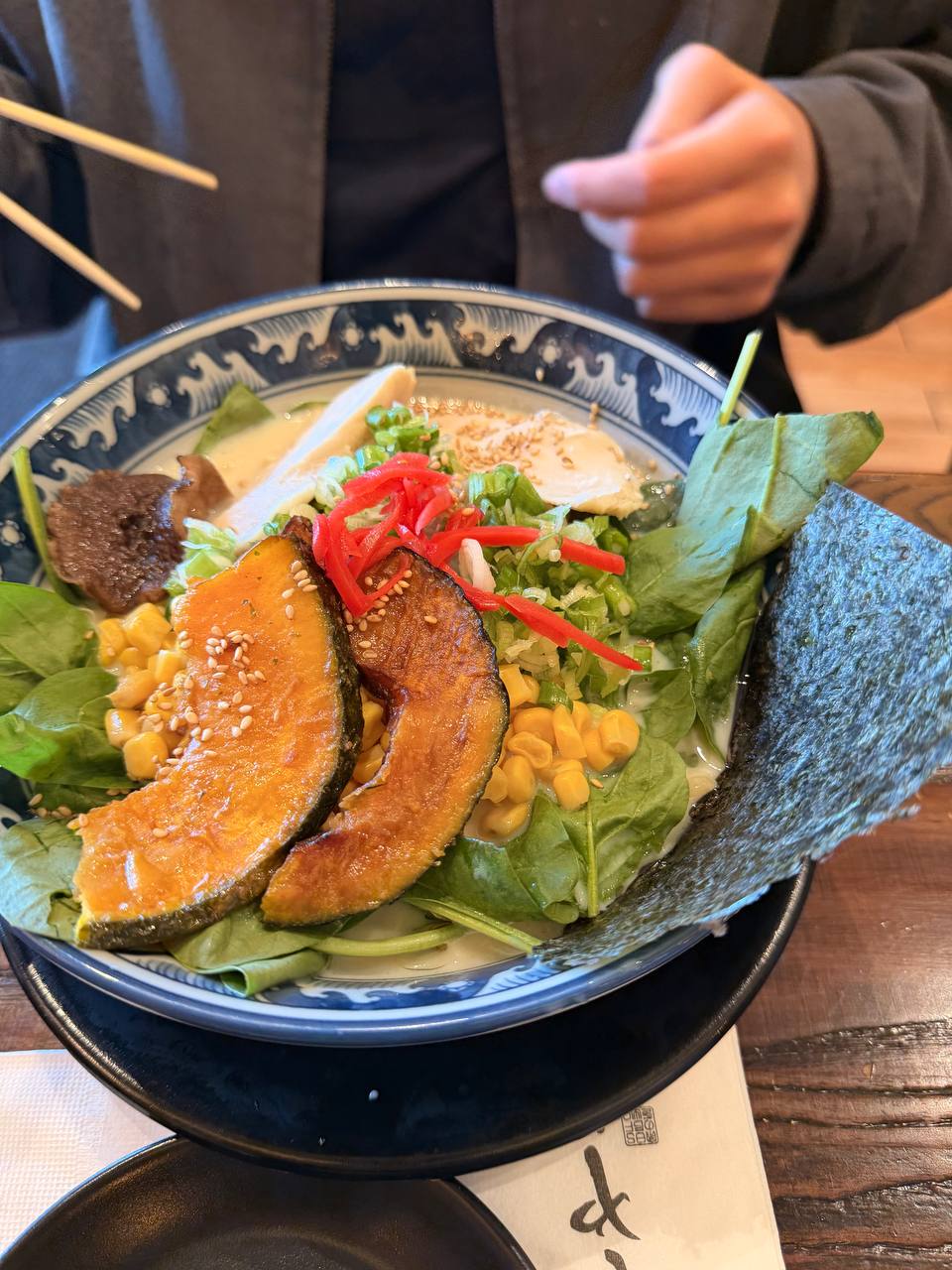
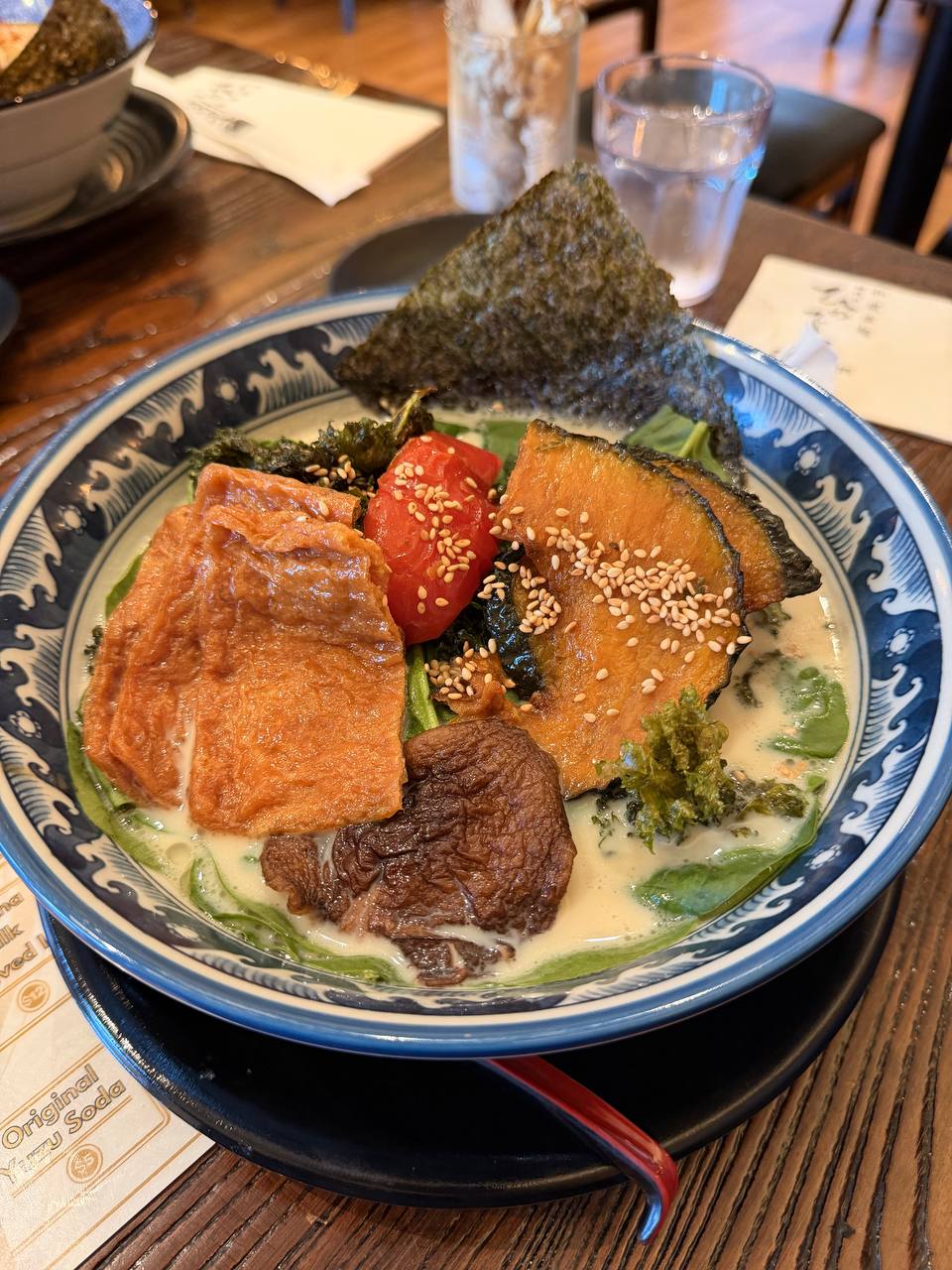
The bowl in Campbell that morning was the Creamy Vegan Ramen: a pale, silky broth built from shiitake mushroom dashi, soy milk, and Hinodeya’s original sesame sauce — no bonito, no pork, entirely plant-based, but nowhere near thin. It’s genuinely creamy, with a roundness that usually comes from animal fat, achieved instead through the soy milk and sesame combination. The bowl arrives loaded: roasted kabocha squash, fresh spinach, sweet corn, shredded scallions, pickled red ginger, sesame seeds, a full sheet of nori, and spinach-infused wheat noodles underneath everything.
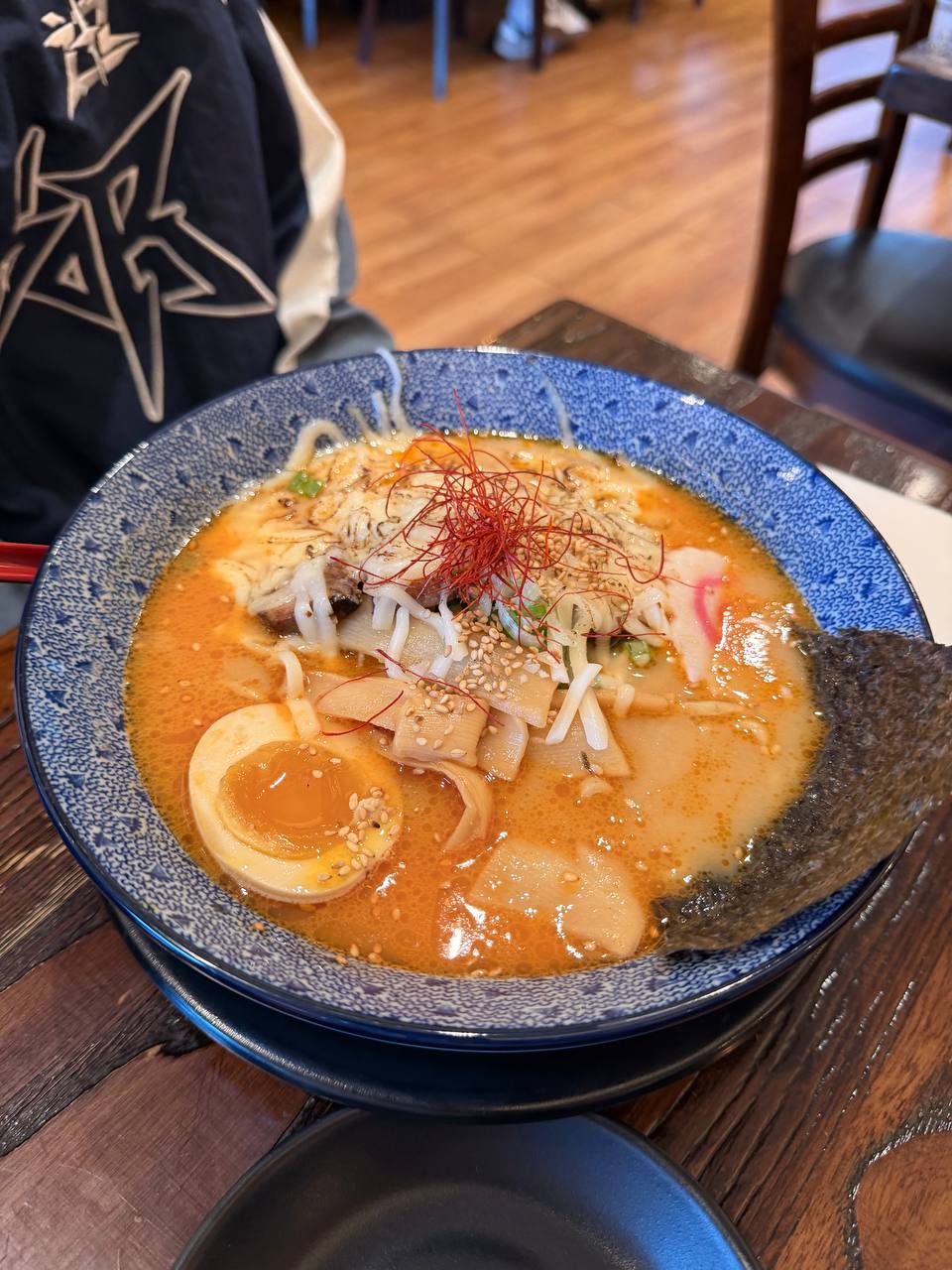
The second bowl was the Spicy Miso Ramen — a completely different animal, built on the traditional Hinodeya dashi base but finished with miso and chili heat. This one comes with a soft-boiled marinated egg (ajitama) cut in half to show off the jammy orange yolk, bamboo shoots, bean sprouts, scallions, and threads of red chili laid across the top for both color and a real kick. It’s the more familiar ramen-shop bowl of the two, but the dashi base still comes through underneath the miso and spice — it doesn’t just taste like a bowl of spicy broth with noodles dropped in.
Between the two, the Creamy Vegan Ramen is the one that actually makes Hinodeya’s case. Anyone can make a spicy miso bowl taste good — heat and umami paste do a lot of the work. Making a broth with zero animal product taste this rich, without leaning on the usual pork-fat trick, is the harder dish to pull off, and it’s the one that shows what the dashi-first philosophy is actually for.
Why the Broth Style Matters More Than It Sounds
It would be easy to read “dashi-based” as a niche distinction that only matters to ramen obsessives. It doesn’t — it changes the entire eating experience. Tonkotsu broths are built to be heavy: they coat your mouth, they’re rich enough that a small bowl feels like a full meal, and the flavor doesn’t change much from the first spoonful to the last. Dashi-based broths are lighter and more layered — you can actually taste the vegetables and toppings on top of the broth instead of everything getting flattened into one pork-fat note. It’s the difference between a broth that overwhelms the bowl and one that supports it.
That’s also why Hinodeya can do a genuinely good vegan ramen without it feeling like a compromise dish on the menu. When your whole broth philosophy was never built around pork bones in the first place, swapping to a shiitake-and-soy-milk base is a smaller jump than it would be for a tonkotsu shop trying to fake it.
All Hinodeya Locations in the Bay Area (and Beyond)
If Campbell isn’t convenient, Hinodeya has expanded enough that there’s likely a location closer to you. All nine US locations as of this writing:
San Francisco Bay Area
- Japantown — 1737 Buchanan St, San Francisco, CA 94115 · (415) 216-5011
- Union Square — 219 O’Farrell St, San Francisco, CA 94102 · (415) 740-1484
- Downtown / FiDi — 680 Clay Street, San Francisco, CA 94111 · (415) 200-6466
- Chestnut Street — 3340 Steiner Street, San Francisco, CA 94123 · (415) 949-9800
- Campbell Town — 2210 S Bascom Ave, Campbell, CA 95008 · (408) 744-2155
- San Jose — 9 N Market St, San Jose, CA 95113 · (408) 303-3466
- Newark — 5724 Thornton Ave, Ste B, Newark, CA 94560 · (669) 455-7030
Outside the Bay Area
- Palms, Los Angeles — 11127 Palms Boulevard, Los Angeles, CA 90034 · (310) 889-6282
- Little Tokyo, Los Angeles — 232 E 2nd St, Suite B, Los Angeles, CA 90012 · (415) 823-7365
- Greenville, Dallas — 2023 Greenville Ave, Suite 130, Dallas, TX 75206 · (972) 685-4117
Seven locations within driving distance of the South Bay alone — Hinodeya has quietly become one of the most accessible dashi-style ramen chains in California without the hype cycle most restaurant expansions get.
Worth It?
Yes. If your ramen frame of reference is tonkotsu-heavy shops, Hinodeya is worth trying specifically because it’s doing something different well — and if you’re vegan or vegetarian, the Creamy Vegan Ramen is one of the more convincing plant-based ramen bowls in the South Bay, not an afterthought item bolted onto a pork-broth menu.
Sources: Hinodeya’s own official history and locations pages (hinodeyaramen.com), Bay Area News Group / Mercury News coverage of the Campbell opening (2021), Hoodline’s 2016 interview with chef/CEO Masao Kuribara at the original San Francisco Japantown opening. Menu and broth details cross-checked against Hinodeya’s own published menu descriptions.