A tire can look fine and still be running at the wrong pressure. The useful number is not a forum favorite or whatever is printed most prominently on the sidewall. For street riding, start with the cold-pressure specification for your motorcycle.
The short version: find the bike’s specification, check both tires cold with a reliable gauge, and use TPMS to make monitoring easier—not to turn a warning light into your entire maintenance routine.
Use the motorcycle’s spec, not a universal PSI
Bridgestone’s motorcycle inflation guide explains that the vehicle manufacturer establishes the pressure for the particular motorcycle. Look in the owner’s manual or on the bike’s frame placard. Front and rear pressures may differ; check each rather than assuming they match.
The sidewall pressure relates to the tire’s rated maximum load. It is not automatically the recommended operating pressure for your bike. It may happen to match the bike’s specification, but the manual or placard—not that coincidence—is your reference.
There is no useful universal front/rear chart here. A number borrowed from another motorcycle can look reassuringly precise while being wrong for yours.
What “cold” actually means
Bridgestone defines a cold tire as one on a motorcycle that has been stationary for at least three hours. Checking before the day’s ride is an easy way to keep the routine consistent.
Riding raises tire pressure. Do not release air from a hot tire just to bring it down to the cold-pressure target: it can be underinflated when it cools. If you are uncertain about a reading after riding, let the tires cool and check again.
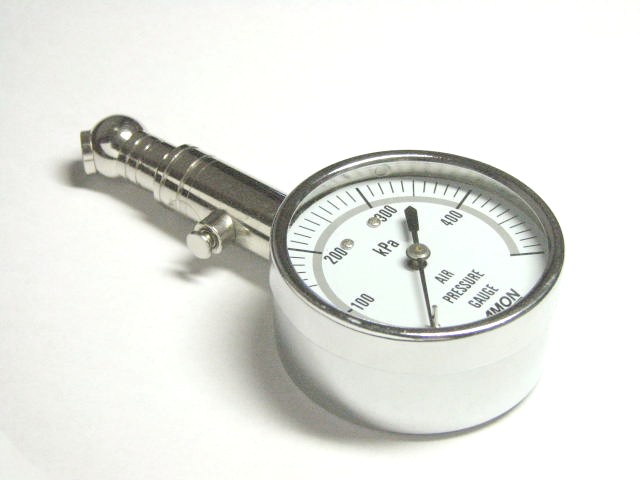
A simple gauge routine
- Find the correct front and rear cold-pressure specifications for your bike and load.
- With the tires cold, remove the valve cap and press a reliable gauge squarely onto the valve.
- Read the pressure, add or release air as needed, and recheck.
- Replace the cap and repeat on the other tire.
- Look at the tread and sidewalls while you are there. Damage or unusual pressure loss deserves professional inspection, not repeated topping-up.
For regular riders, Bridgestone recommends checking at least weekly, before an extended trip, and before riding if the bike is used infrequently. A visual glance is not a pressure measurement. If you doubt your gauge, ask a tire shop to compare it with theirs.
TPMS makes the habit easier
A phone-connected aftermarket tire-pressure monitoring system can reduce the friction of checking before you ride. The useful habit is to open the app while parked, check both tires, and investigate anything unexpected.
Before buying, check the particular system’s motorcycle, valve and phone requirements in its installation instructions. Confirm that the displayed reading is current rather than assuming an old value is live. Keep a reliable gauge available for cold-pressure checks and for resolving a questionable reading. No particular sensor or app is being endorsed here.
Passengers, luggage and special riding
Use any load-specific instructions in your owner’s manual. Do not invent an extra-pressure formula for carrying a passenger, and do not try to compensate for overloading by exceeding the motorcycle manufacturer’s pressure recommendations. Bridgestone specifically warns against both overloading and increasing pressure beyond the bike’s recommendations.
Track and off-road settings are separate applications. Do not copy a track-day or trail pressure onto the street without the appropriate manufacturer guidance. If pressures were lowered off-road, restore the correct street settings before highway riding.
From the field
When I don’t have TPMS, I check my tire pressure at least once a week. My preference is an aftermarket TPMS with a phone app, so checking pressure before each day’s ride is convenient.
The habit matters more than the gadget
A good sensor is convenient. A reliable gauge is useful. Neither replaces knowing the correct setting for your motorcycle. Save the specification somewhere easy to find, make the check routine, and treat an unexplained change as something to investigate.
For the wider seasonal routine, see the California fall motorcycle preparation checklist. This guide focuses on getting the pressure measurement and reference right.
Technical source: Bridgestone’s Guide for Proper Inflation of Motorcycle Tires. Follow your motorcycle’s current owner’s manual and the relevant tire and sensor manufacturers’ instructions.