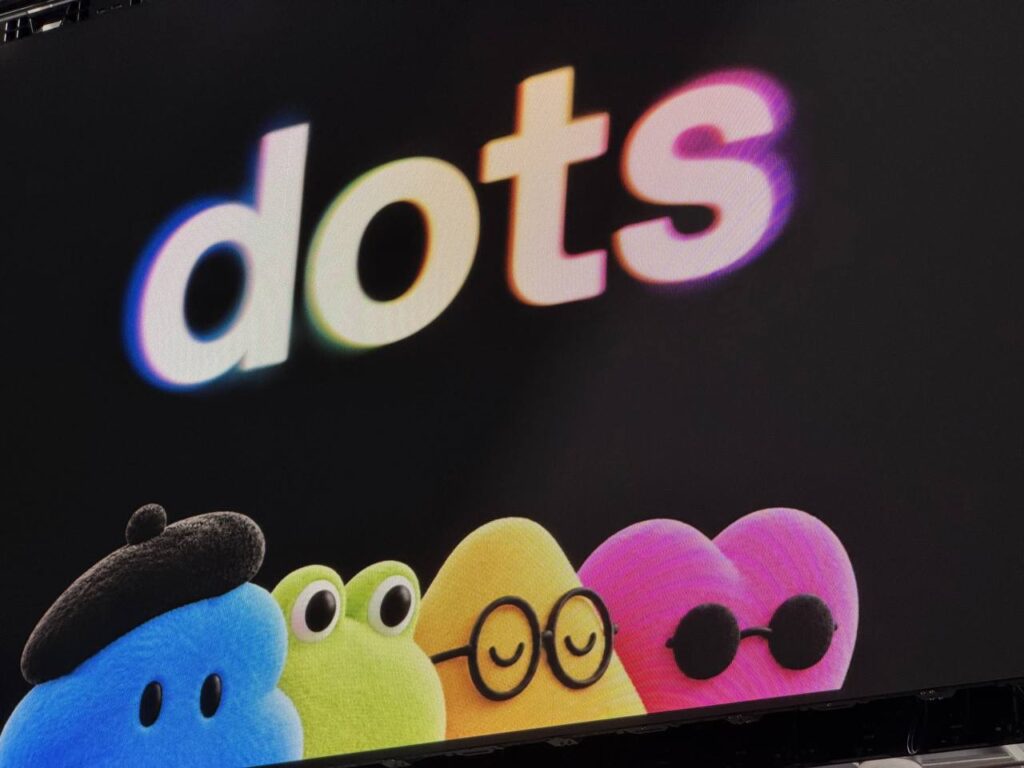
OpenAI packed more than 20 announcements into DevDay 2026 in San Francisco. GPT-6.1 Sol was on the board. Codex picked up cloud and security capabilities. ChatGPT Space turned AI work into something a team can share. But the announcement that changed the room—and the operating question—was Dots.
A Dot is OpenAI’s name for an always-on AI agent with its own cloud computer, browser, connected apps, and the ability to keep working between conversations. That is a meaningful shift from asking a chatbot for an answer. You are assigning ongoing responsibility to software.
The question is no longer only, “Can this AI help me?” It is: What work should it be allowed to own, what can it access, and how will I know when it gets something wrong?
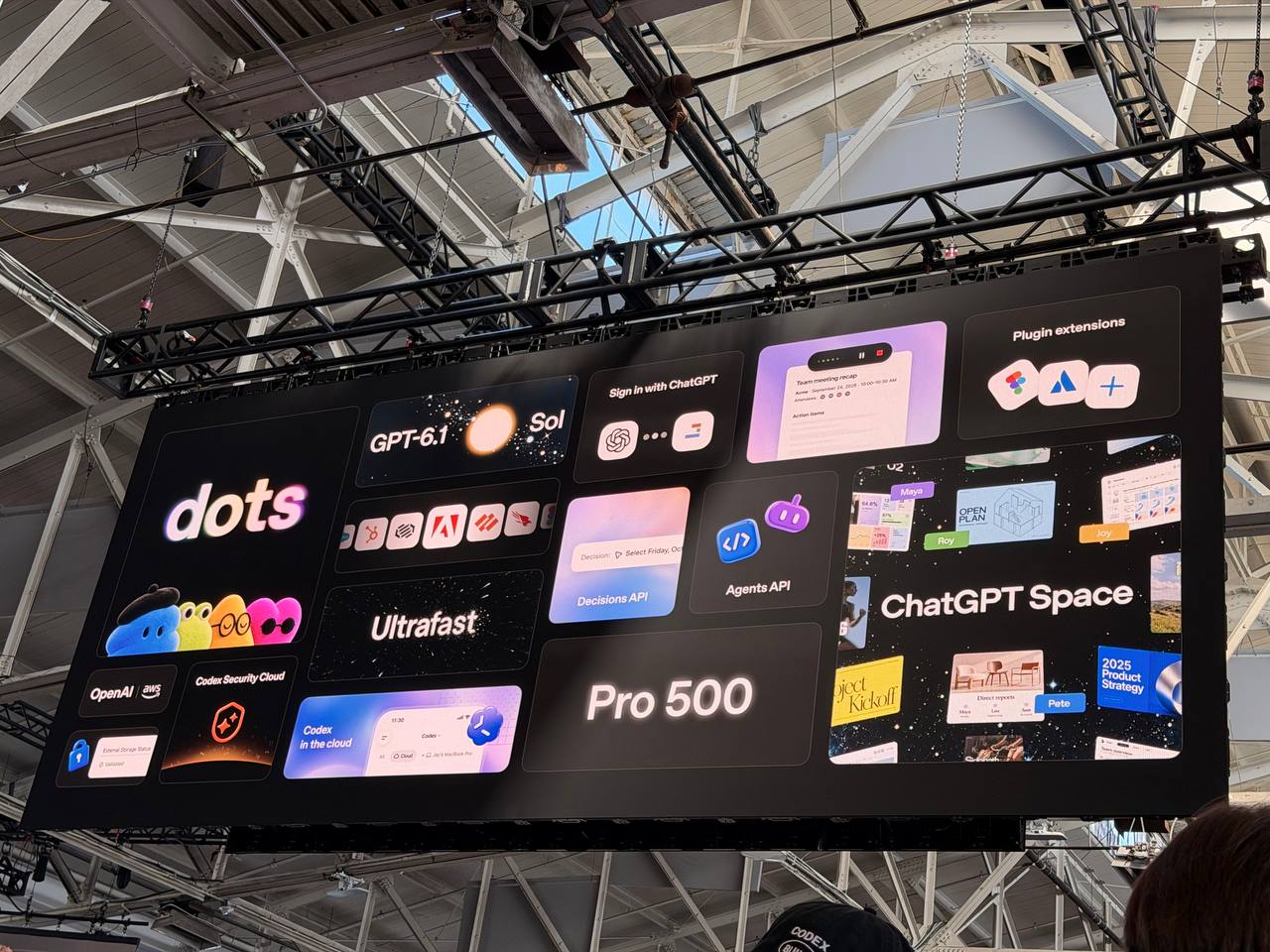
What OpenAI announced
OpenAI says Dots are powered by GPT-6 Astra and can connect to more than 4,000 apps through its plugin ecosystem. A Dot can work through ChatGPT, Slack, and Microsoft Teams, learn from feedback, and continue several projects without forcing the user to manage a separate conversation for every task.
The product is beginning to roll out to Pro, Business Premium, and Enterprise customers in eligible markets. OpenAI also previewed “specialist dots” for organizations: agents with their own identity, credentials, hardware, and defined responsibility.
That last detail matters. A personal assistant acts through one person’s context. A specialist agent becomes a new kind of machine identity inside the organization—one that may need onboarding, permissions, monitoring, review, and eventually offboarding.
OpenAI is pairing Dots with ChatGPT Space, a shared environment where people, ChatGPT, Codex, and Dots can work from the same files and project context. The practical promise is continuity: the agent does not merely produce a one-time answer; it can help maintain a living plan, document, analysis, or workflow as conditions change.
The launch was bigger than one agent
The keynote also showed how OpenAI is assembling the supporting layers around persistent agents.
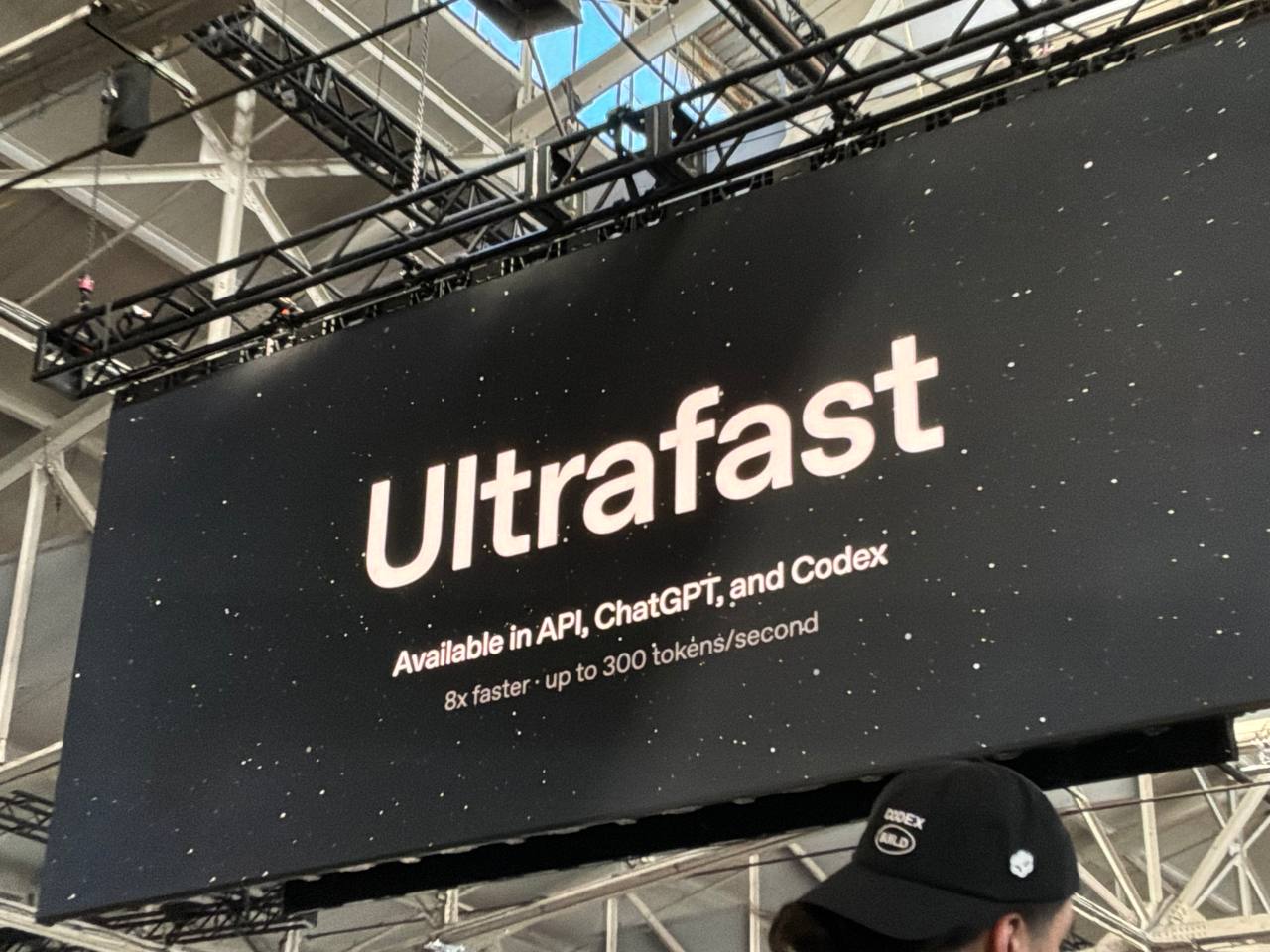
- GPT-6.1 Sol is positioned as a lower-cost model for coding, computer use, document work, and multi-step business workflows. OpenAI says it approaches GPT-6 Astra on several evaluations at one-fifth of Astra’s standard input and output token prices. Those are vendor-reported evaluations, not a guarantee for every workload.
- The Agents API now supports computer use and brings Codex-style multi-agent capabilities, tool search, tool calling, and context compaction into developer applications.
- Codex received a broader cloud workflow, code-review features, and Codex Security Cloud.
- ChatGPT Space gives the work a shared home rather than leaving it inside one person’s private chat.
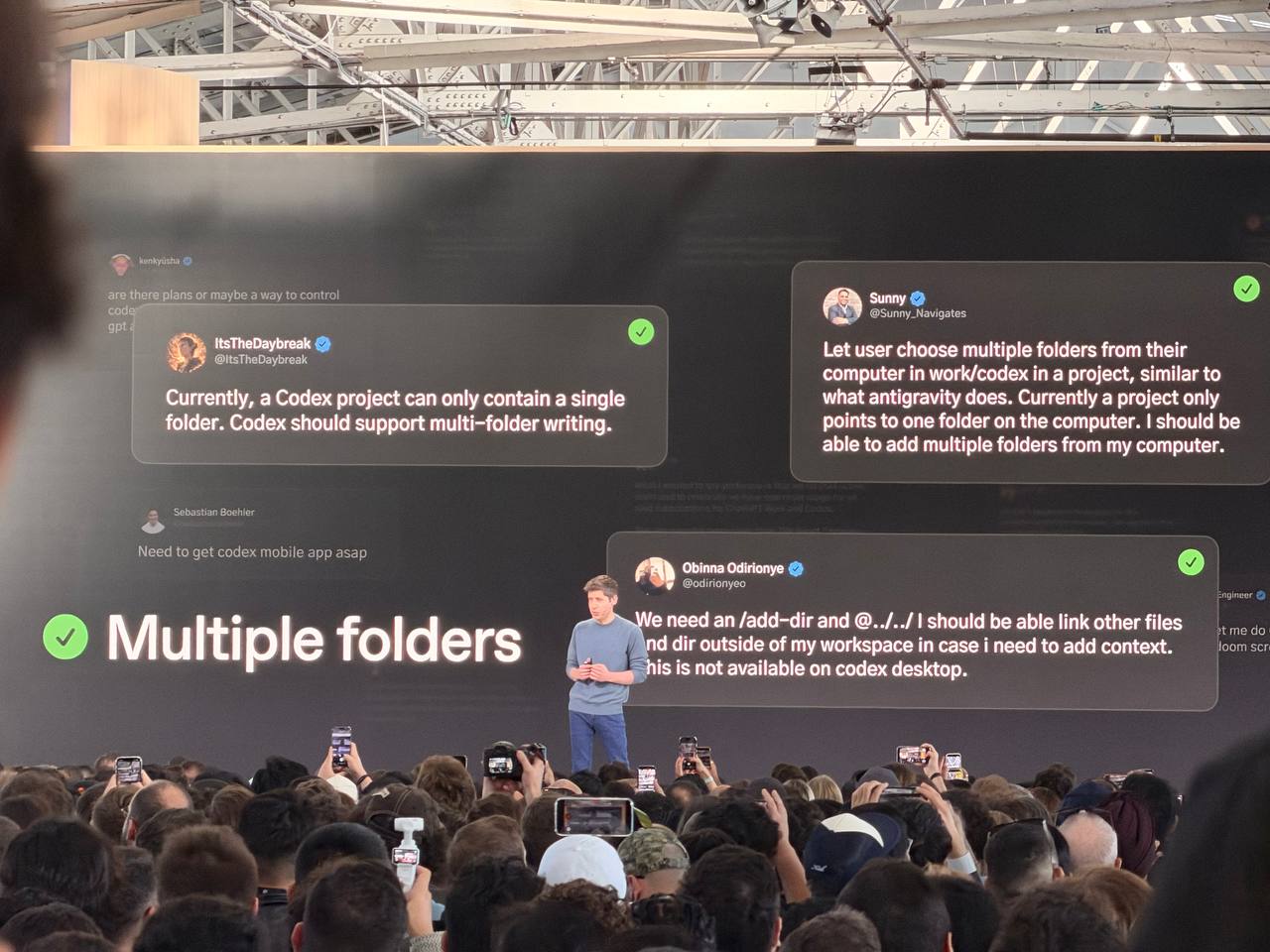
- The keynote also highlighted practical Codex improvements such as multi-folder projects—small compared with a new model, but important when real work spans more than one repository or directory.
Viewed separately, these look like product updates. Viewed together, they form an operating stack: models to reason, agents to keep working, computers and tools to act, shared spaces to preserve context, and review systems intended to control consequential actions.
The governance feature is the product
OpenAI’s safety documentation is unusually direct about the risk: an agent’s mistake can change the wrong file or share information a user intended to keep private.
The safeguards described for Dots include:
- a separate cloud computer for each Dot;
- app-level permissions and user-controlled connections;
- read-only tools for proactive background research;
- Custom Rules that can allow, block, or require approval for actions;
- an Activity View for following and redirecting work;
- secure sign-in flows designed to keep passwords out of model context;
- a separate Auto-review system that checks planned actions; and
- mandatory human handoffs for some sensitive steps.
Those controls are important. They are also not the same as proof that the agent is safe for a particular workflow. OpenAI itself says Dots can still make mistakes and that consequential work should be reviewed.
For operators, that means the impressive part is not that a Dot can work overnight. The important part is whether its responsibility is narrow enough to evaluate and whether its actions leave evidence a human can understand.
Five questions before you give an agent ongoing responsibility
Before enabling any persistent agent—OpenAI’s or anyone else’s—I would want clear answers to five questions:
- What exact outcome does the agent own? “Help with operations” is not a responsibility. “Prepare a weekly exception report from these three approved systems” is.
- What can it read, change, or send? Separate discovery from action. Read-only research should not silently become permission to modify a record or contact a person.
- Which decisions always come back to a human? Purchases, commitments, access changes, sensitive disclosures, destructive actions, and external messages need explicit boundaries.
- What evidence will it leave behind? A final answer is not enough. You need activity history, affected systems, approvals, failures, and the outcome of the work.
- How do you stop and unwind it? An operator should know how to pause the agent, revoke its access, identify what changed, and recover from a bad run.
This is not bureaucracy around an exciting tool. It is the minimum operating design for software that can continue acting after the chat window closes.
From the field
Seeing Dots in person made the shift clear: AI is moving from answering questions to owning ongoing work. That makes boundaries, accountability, and human oversight more important than ever.
The practical takeaway
Dots may become useful precisely because they remove the need to supervise every intermediate step. That is also why teams should define the operating boundary before they are impressed by the demo.
The right first deployment is not the broadest responsibility an agent can technically handle. It is a bounded workflow where success is observable, errors are recoverable, access is narrow, and human review is positioned before the costly step—not after it.
DevDay 2026 showed that the industry is moving from AI that answers questions to AI that carries responsibility. The next competitive advantage will not come from having the most agents. It will come from knowing which responsibilities to delegate, which evidence to demand, and where human judgment must remain in the loop.
Sources
- OpenAI: DevDay 2026 Recap
- OpenAI: Introducing Dots
- OpenAI: Safety, security, and privacy in Dots
- OpenAI: Introducing GPT-6.1 Sol
- VentureBeat: OpenAI launches Dots and ChatGPT Space
- CNBC: OpenAI DevDay 2026 live updates
News disclaimer: This firsthand report covers OpenAI’s September 29, 2026 DevDay announcements. Product claims and availability were rechecked against OpenAI’s public pages on October 14, 2026. Product availability, pricing, limits, and safeguards may change as the rollout continues. OpenAI’s performance and safety results are vendor-reported unless otherwise stated.