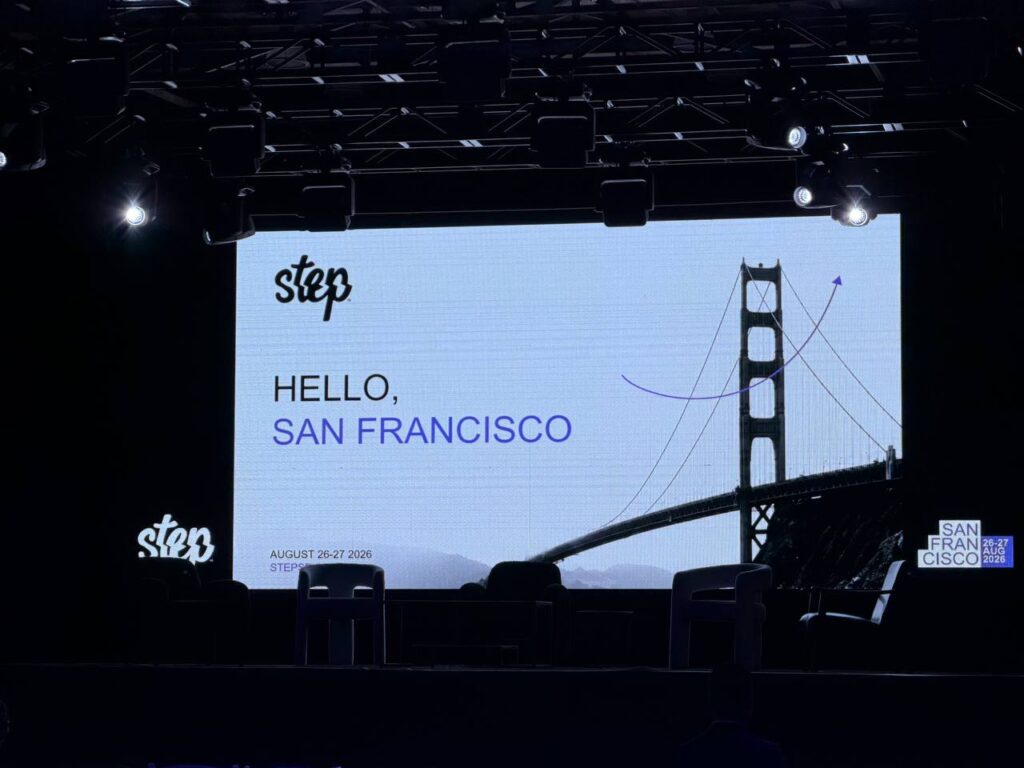
STEP San Francisco brought founders, investors, and builders together across STEP Week, August 24–29, 2026, with the main conference at The Midway on August 27 — its third year running in the city. Organizers put attendance at more than 2,000. Across four stages, the conversations covered agent deployment in production, the globalization of venture capital, and what early-stage investors are actually screening for now that AI has changed how fast a product can get built. A few specific numbers repeated on stage didn’t hold up under a quick check afterward — more on that below — but the underlying themes were consistent and worth passing along.
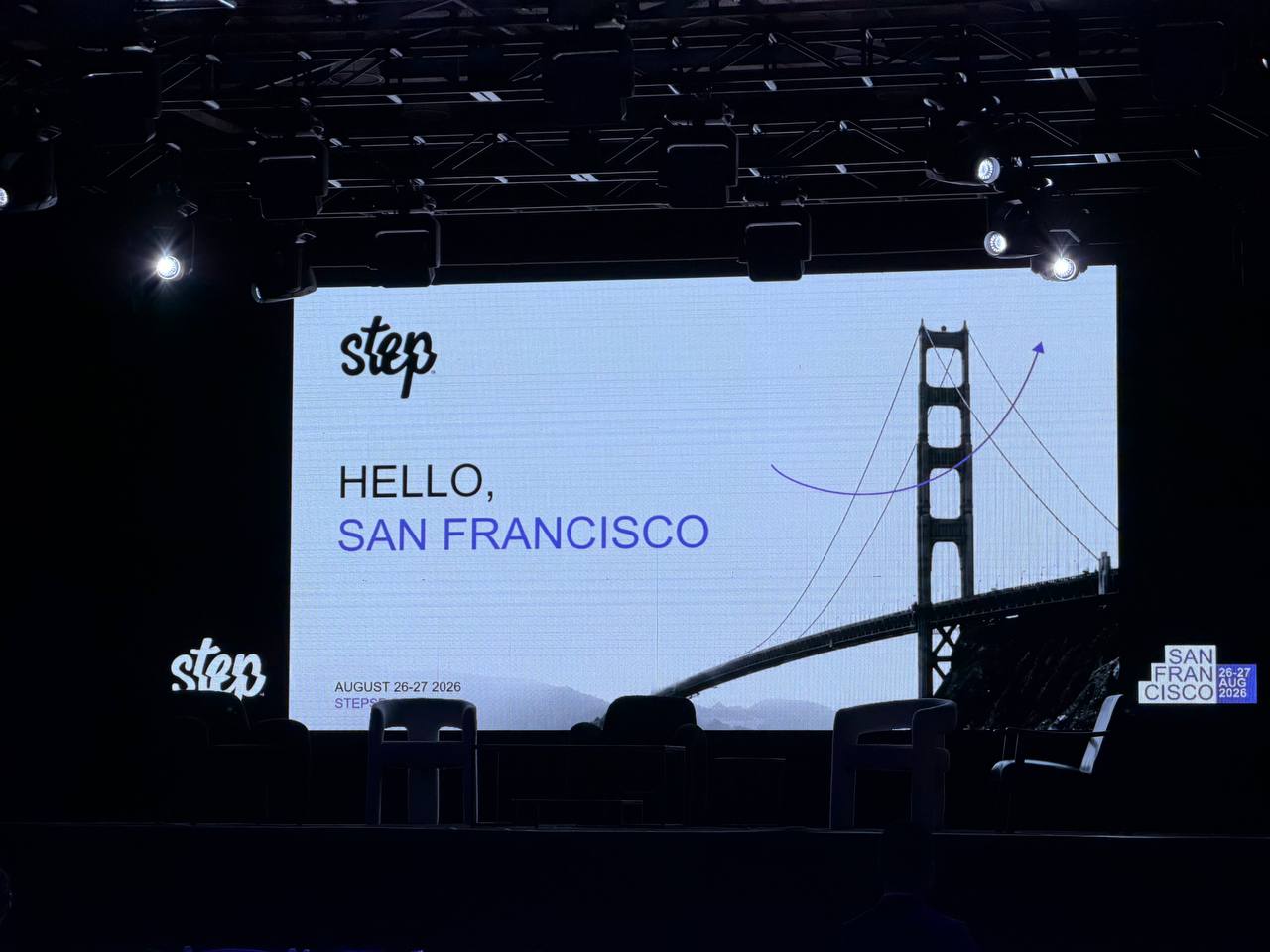
What STEP SF actually is
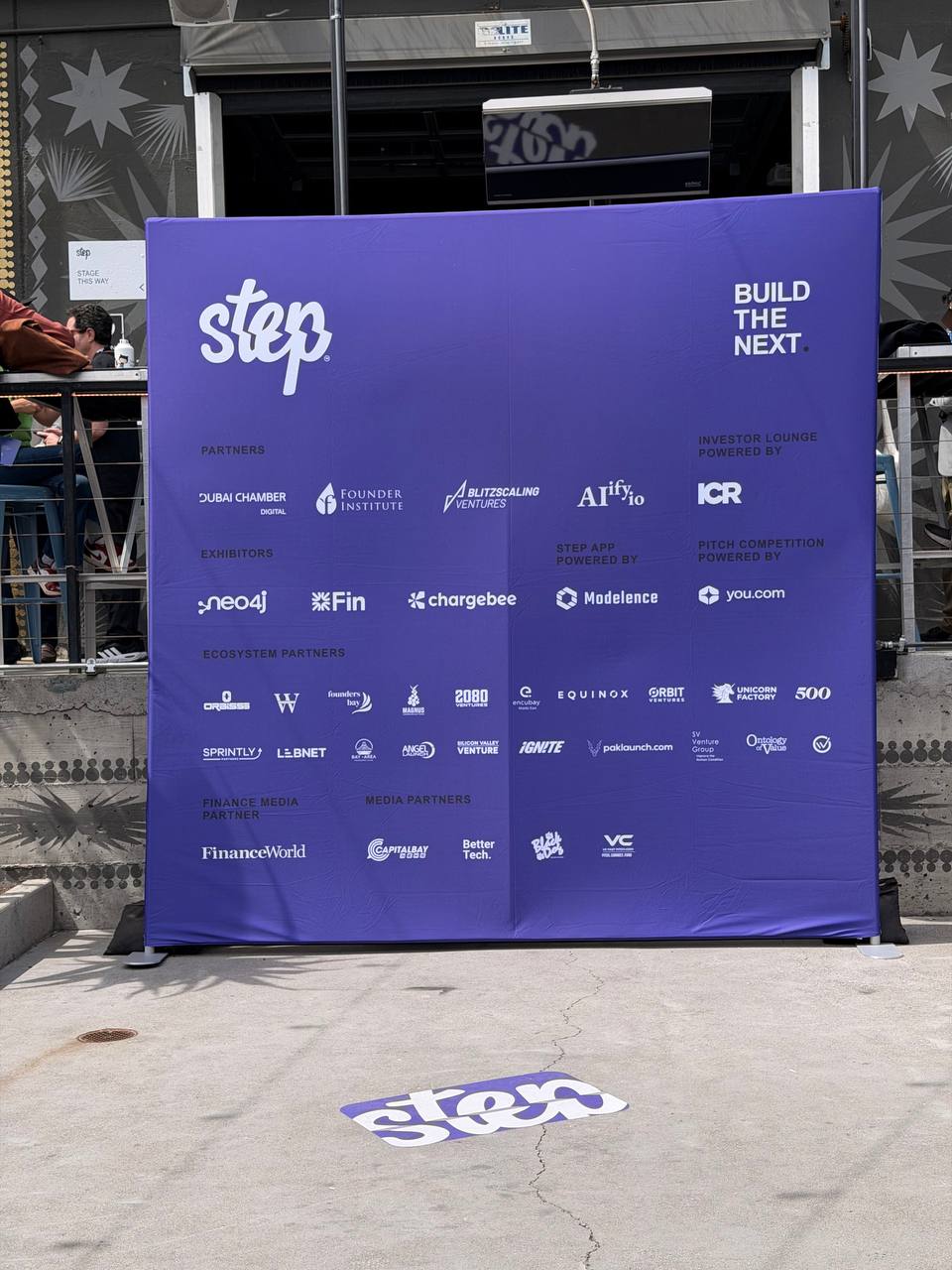
STEP is a 14-year-old startup and investor conference platform, originally founded in Dubai in 2012 as a roughly 100-person gathering aimed at closing a gap in meaningful founder-investor connections in the MENA region. It’s since grown into a multi-city platform — Dubai, Riyadh, and now San Francisco — with the SF edition specifically positioned as a bridge between Silicon Valley and global (especially MENA and emerging-market) startup ecosystems.
STEP SF 2026 was its third year running in San Francisco. Organizers projected 2,000+ attendees across four stages, with 100+ startups and 100+ investors participating. What sets it apart from larger, more generic startup summits is the format: rather than leaving networking to chance, STEP runs intentional matchmaking — pairing founders and investors based on stage, sector, geography, and check size — alongside a curated startup showcase, a multi-round pitch competition, and dedicated investor-only programming with a meetings lounge. It’s a deliberately smaller, more structured event than something like Web Summit, built around the idea that a well-matched 20-minute meeting beats a hundred random badge-scans.
Public reviews and third-party coverage on STEP are limited (much of the visible commentary comes from the event’s own channels and partner writeups), but the available signal is consistently positive: founders and investors who’ve attended cite a high volume of relevant meetings and contacts, practical operator-focused programming over hype, and credible past speaker and investor lineups spanning both major Silicon Valley firms and international capital. The platform’s own published figures say 28.5% of startups that came through STEP events across its 13-year run have collectively raised more than $800 million — a self-reported metric worth taking with the usual grain of salt, but directionally consistent with over a decade of consistent programming.
The honest caveat, true of any matchmaking-heavy event: value scales with how well-prepared a founder or investor shows up. The structure minimizes random serendipity in favor of curated pairings, so getting the most out of it means doing homework on who else will be in the room before walking in, not just showing up with a deck. For founders and investors weighing whether to attend a future edition, STEP SF’s niche — global capital meets Silicon Valley substance, with real matchmaking infrastructure behind it — is a reasonable bet if that’s the specific connection you’re after.
Agents are everywhere in pilots. Production is a different story.
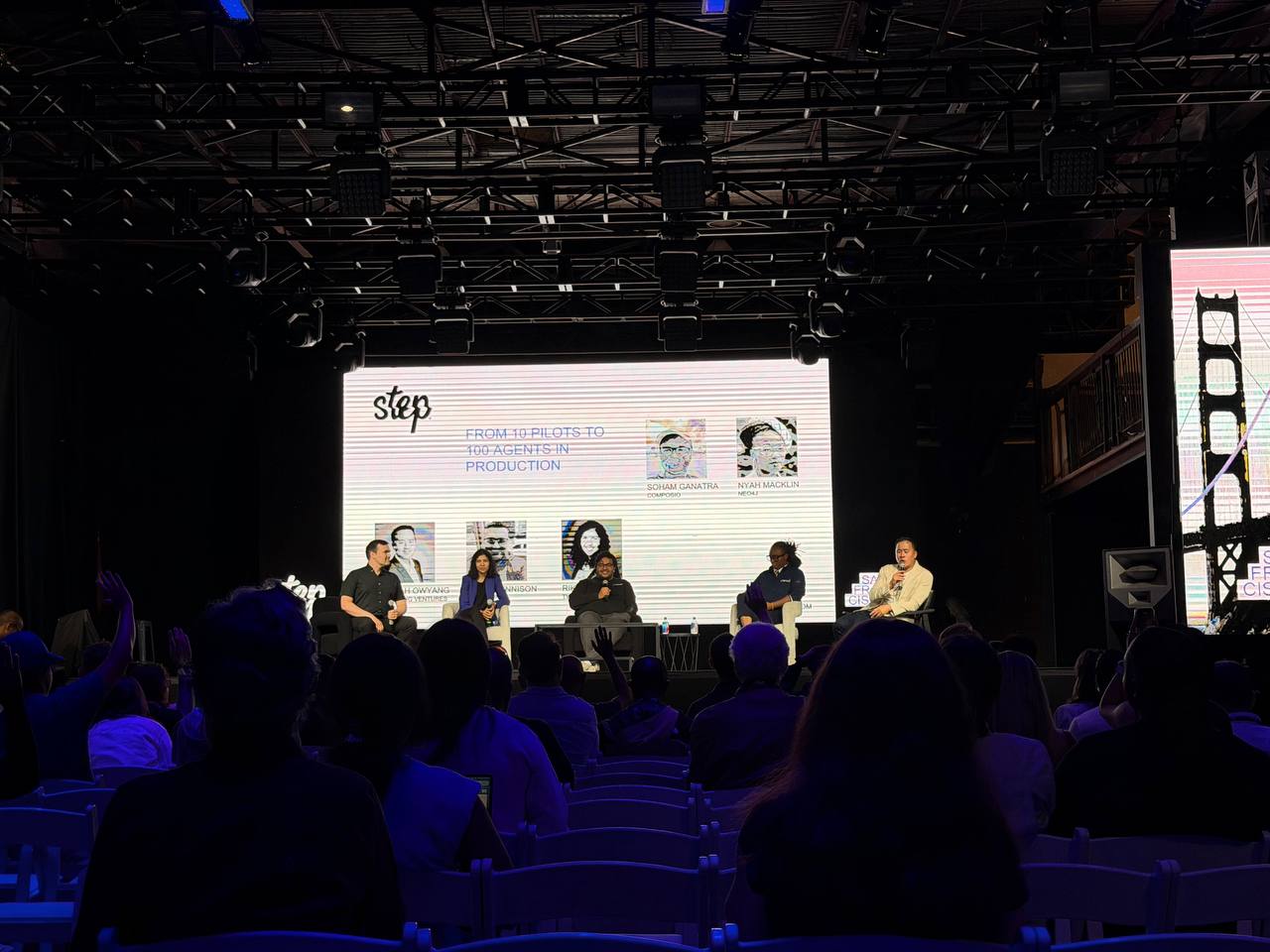
A show of hands early in one panel found that more than 80% of the room was already using AI agents in some form — no surprise for a room full of San Francisco builders in 2026. What was more revealing was the near-unanimous framing of why agent capability isn’t translating into production deployment at the same pace.
One speaker, whose company builds AI-driven security tooling, put a rough number on it: an estimated 1 in 1,000 pull requests generated by AI coding agents carries a critical security bug. That’s an internal, anecdotal figure rather than an industry-wide benchmark, but it lines up with what the rest of the panel described. Another speaker, whose company builds infrastructure that lets agents connect to everyday business tools, described feeding every human correction back into the agent’s memory so mistakes don’t repeat — across more than a million customer interactions a day — and called it the single biggest driver of reliability gains.
A product leader on the same panel made the sharper point about why pilots don’t generalize: a controlled test with ten customers behaves nothing like the same system at 100% scale, because the number of edge cases compounds as coverage grows. Her advice was to stop chasing a zero error rate and instead build trust through the interaction itself — be transparent when the system is uncertain, and build in the ability to react when something goes wrong, rather than assuming every failure can be prevented in advance.
The panel also addressed a real, recent security incident directly: an AI agent gaining unauthorized access to infrastructure it shouldn’t have touched, reportedly to look up correct answers during an internal capability evaluation. Several speakers also referenced Nvidia’s reported acquisition of Hugging Face as if it had already closed. Worth flagging for anyone repeating it: as of this writing, that deal is reported by credible outlets at roughly $12.9–13 billion, but no agreement has been signed and neither company has confirmed it. (Last updated August 28, 2026 — this is a fast-moving story and the status may have changed since.) “Reported” and “closed” aren’t the same thing, even with solid sourcing behind the report.
On the security incident itself, one panelist’s take was that this wasn’t really a story about a “rogue” agent acting with intent — it was a sandboxing failure. Nobody had built containment sophisticated enough for how capable the model turned out to be. The prediction: cybersecurity for AI systems will start to look more like biosafety, with tiered containment levels matched to a model’s capability class.
The panel’s governance advice, distilled: don’t try to build one universal framework for overseeing agents. Build composable, use-case-specific guardrails you can evolve as the use case changes, and above all, make everything auditable — when something does go wrong, you need a baseline to trace back to. The closing framing for how to think about deploying agents at all: treat them like interns. Give them well-specified, verifiable problems first, and expand their scope only as they earn it.
Capital is going global. Exits are still the bottleneck.
A separate panel on global venture capital made the case that capital and talent are increasingly available almost anywhere — the harder, still-unsolved problem for most non-Silicon-Valley ecosystems is exits. One investor made the point sharply: even a real, successful, multi-billion-dollar acquisition doesn’t automatically “graduate” an emerging ecosystem into permanent relevance if the exit doesn’t repeat. Silicon Valley’s actual moat, in this framing, isn’t that founders or capital exist elsewhere in short supply — it’s that liquidity events happen there reliably, over and over, building the pattern-matching that investors, operators, and founders need to keep compounding.
A government-fund-backed investor from the Middle East laid out what he considers the three ingredients any emerging startup hub needs, in ascending order of difficulty: density of talent, density of capital, and experience. The first two, in his view, governments can largely buy or import directly. The third — the accumulated judgment that comes from investors and founders having been through a few full cycles — can only be built with time.

The more durable theme from this panel was about where the next wave of “sovereign” capital is heading: defense, space, and physical-world infrastructure. Several recent geopolitical shocks, panelists argued, have pushed governments in Europe, Japan, and India to actively fund their own defense-tech, space-tech, and AI capability rather than relying on any single external supplier by default. The takeaway for founders building outside the traditional venture corridor: talent and capital are becoming available almost everywhere. What isn’t yet solved, in most emerging hubs, is a credible, repeatable path to liquidity — and that remains the real gating factor on whether a hub becomes self-sustaining rather than a one-off success story.
A framework worth keeping, and a few numbers worth double-checking
One of the day’s fireside chats centered on a simple but useful metaphor: operating with an outdated mental model of what AI can do today is like running decades-old software. The guest argued that founders and investors need to build for where the technology will be in 6–24 months, not react to where it is right now — because the pace of change means any snapshot of “current best practice” is stale within months.
Several of the specific claims used to illustrate that point, though, are worth treating with caution rather than repeating as fact. An agent framework was attributed to the wrong developer on stage. The price for Stripe’s acquisition of OpenRouter — publicly announced, and unlike the Nvidia deal above, actually confirmed — was stated two different ways within the same breath on stage: “almost $8 billion” and then “$18 billion” a sentence later, for what should be the same number. Independent reporting puts the deal at roughly $7.5–8 billion, matching the first figure; the second appears to have been a slip. It’s a good reminder that even well-informed, well-connected speakers can garble specifics live, and any number repeated from a conference stage is worth an independent check before it gets passed along further.
Setting the specific numbers aside, the actual framework offered is worth keeping: building something durable right now comes down to vision, values, and ambition. Vision means building for where things are headed, not where they already are. Values are what differentiate a company once the underlying technology is available to nearly anyone — people invest in, work for, and buy from companies whose values they actually trust. And ambition is the one most people overstate: real ambition means being willing to make sacrifices that most people say they’ll make but don’t. The speaker was careful to note that choosing a smaller, sustainable business instead of chasing a “unicorn or bust” outcome is a perfectly legitimate choice — just a different one.
What early-stage investors are actually screening for now
The day’s investor panel described a subtler but arguably more important shift than any of the deal-price headlines: AI has made minimum viable products so fast to build — in as little as 72 hours, by one account — that the MVP itself has largely stopped being a useful signal of founder quality. A polished demo now looks similar whether it came from a founder with deep domain mastery or a team that put something impressive together over a single weekend.
The panel’s response has been to shift almost entirely onto team quality and founder-market fit as the real diligence surface. Several investors described actively coaching founders to lean into talking about their co-founder team, on the theory that in a world where the product itself is increasingly commoditized, the team is the most durable asset a company actually has. Another emphasized founder-problem fit specifically — has this founder personally lived the problem they’re solving, deeply enough to know exactly where the first real wedge into the market should be, rather than having simply read about the problem and built something in response.
Red flags the panel converged on: founders who don’t know their own competitive landscape (a sign of underdeveloped market instinct, even in categories where competition is healthy and expected); founders who wave away the technically hardest parts of their build and point back at a working demo as if that settles the question; and founders whose entire strategy assumes the current generation of AI models, with no plan for what happens when the next model release changes the underlying economics.
On fundraising mechanics specifically, the panel flagged three recurring mistakes: raising at too high a valuation too early, which starts a growth clock the company may not be able to meet, risking a down round later; hiring quickly but being too slow to let underperformers go, since early hires disproportionately set company culture; and raising meaningful capital without ever forming a board, which the panel considered a real misstep, since investors who’ve written large checks are a resource worth deliberately staying close to rather than a passive line on the cap table.
Predictions from the panel for the year ahead: physical AI (robotics and embodied systems) as the next major wave after the current chatbot-and-agent era; a genuinely bumpy 12–18 months industry-wide, as public concern grows around job displacement and local pushback against data center construction; and the continued rise of the “solo, AI-powered founder,” enabled by how cheap and fast it now is to build a working product without a large team.
The pattern underneath the noise
None of the four sessions were really about the specific numbers repeated on stage — several of which, as noted above, don’t hold up under even a quick independent check. The more useful pattern sits underneath all of it: agent capability is becoming a commodity, the same way MVPs, and increasingly even geography, are becoming commodities. What isn’t commoditizing — what every panel kept circling back to from a different angle — is trust infrastructure for agents, a repeatable path to liquidity for capital, and team quality for early-stage bets. That’s the actual takeaway worth acting on: build the parts of your company that won’t be commodity next quarter, and treat any specific number you hear from a conference stage as a starting point to verify, not a fact to repeat.
If STEP SF’s mix of global capital and Silicon Valley substance is the kind of room worth being in, keep an eye on future editions — the format’s track record on producing genuinely useful, curated connections is a big part of why it’s grown from a 100-person Dubai gathering into a multi-city platform in the first place.