Card options, fares, and app availability change. Verify before your trip.
💳 T-Money card: ₩2,500–₩5,000 at any convenience store · Load separately
🚖 Uber in Seoul: Works · Books local taxis · English interface · Card on file
🚇 Subway fare: ~₩1,500/person · For 4 people = ₩6,000/trip vs $6–10 taxi
💴 Cash needed: ₩50,000–₩100,000 for markets + street food
💳 Credit cards: Accepted almost everywhere except traditional markets
✅ Worth it: Buy one T-Money card at a convenience store. Run the group math before buying more.
At Incheon Airport, before you even clear immigration, the Instagram advice starts playing in your head.
“Get a WOWPASS.”
“T-Money is essential.”
“Check In Seoul gives you discounts.”
“Don’t forget to activate it.”
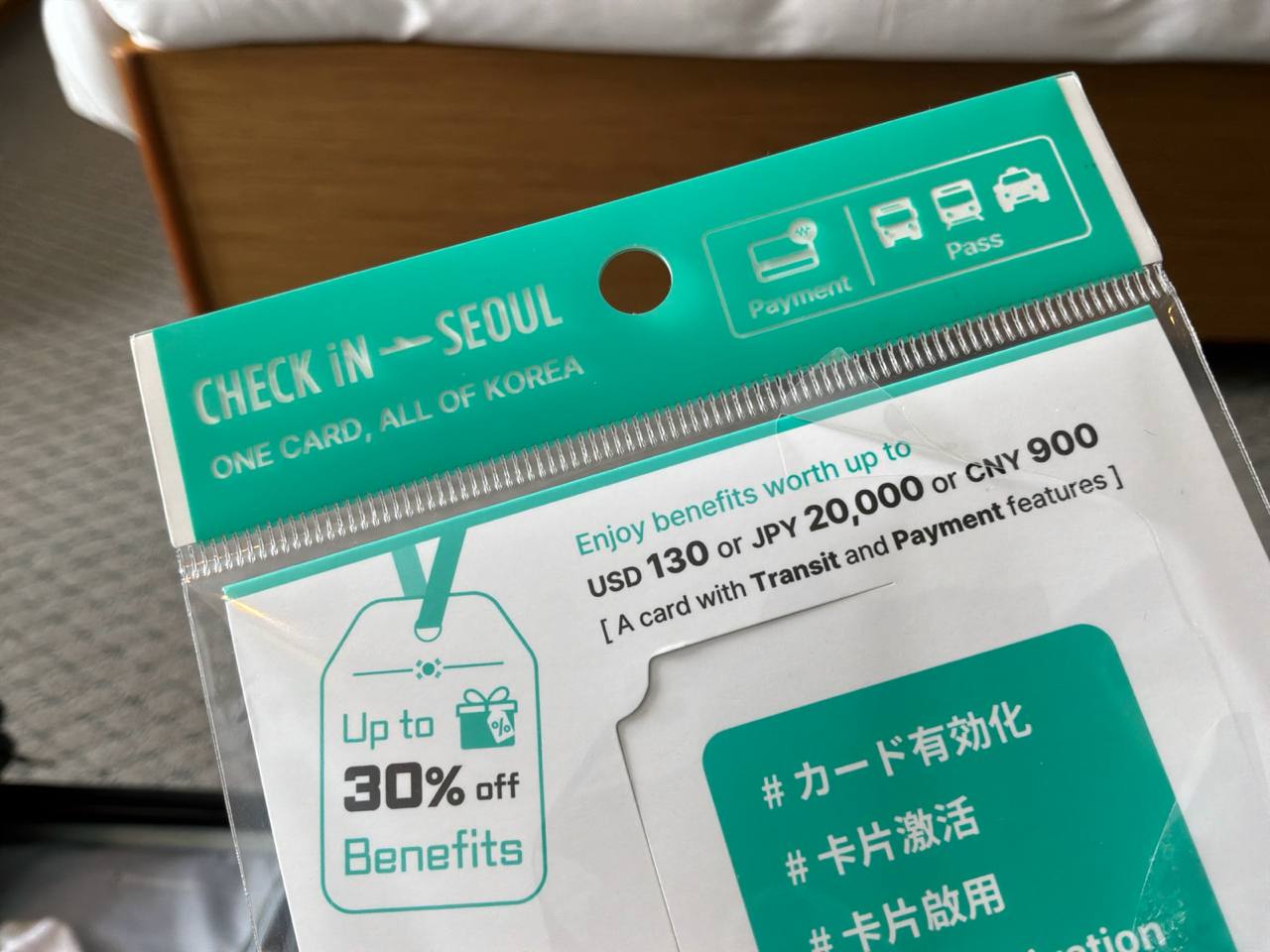
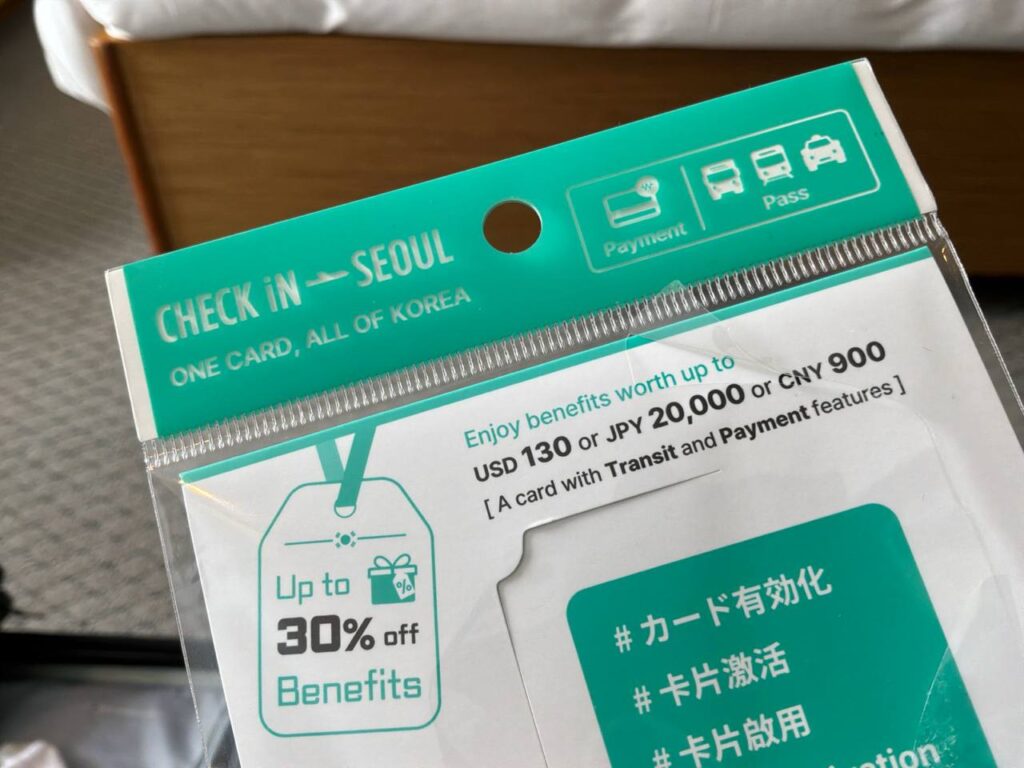
We spent longer than we should have figuring this out at the airport. We bought four Check In Seoul cards — ₩5,000 per card, ₩20,000 (~$15) just for the cards before any balance is loaded. Then loaded each one. We left Seoul having barely used them.
Here’s the honest breakdown — including the math that most travel guides skip.
What Each Card Actually Is
Seoul has too many transit card options and not enough plain-English explanations. Here’s the short version:
T-Money — the basic transit card. Works on every subway, bus, and some taxis. The card itself costs ₩2,500–₩5,000 (~$2–4) — that’s just the card, with no balance loaded. You top up separately at convenience stores or subway machines. Widely available at any GS25, CU, or 7-Eleven.
WOWPASS — a prepaid debit card with a T-Money chip built in. The big advantage: you can insert foreign cash (USD, EUR, JPY, etc.) at WOWPASS kiosks and it converts to Korean won at competitive rates. Good if you want one card for transit AND shopping without visiting a currency exchange.
Namane Card — similar hybrid to WOWPASS. Issued by Korea’s national transportation authority. Less marketing, same basic function.
Climate Card (기후동행카드) — unlimited transit within Seoul for a flat monthly fee (~₩65,000, about $47). Only worth it if you’re riding subway/bus heavily every single day. Overkill for a typical tourist trip.
Check In Seoul — a tourist-specific card with T-Money transit + benefits at tourist attractions (Lotte World, 63 Square, NANTA performances, etc.). Card fee: ₩4,000–₩5,000, with ₩46,000 credit preloaded on the ₩50,000 version. Marketed as “enjoy benefits worth USD 130.” Worth reading the fine print — the benefits require visiting participating venues.
The Math Nobody Shows You
Here’s what most transit card guides don’t calculate: the per-person cost of the Seoul subway versus a taxi for a group.
Seoul subway fare: approximately ₩1,400–₩1,800 per person per ride depending on distance.
For a family of 4: that’s ₩5,600–₩7,200 per trip — roughly $4.30–$5.50 to move 4 people by subway.
A standard Seoul taxi via Uber covering typical tourist distances — Myeongdong to Hongdae, Dongdaemun to Bukchon — costs $6–$10 USD for the whole car.
The gap is roughly $1–5 per trip.
For a group of 4, taking a taxi is often within a few dollars of the subway — and you go door to door, in air conditioning, without navigating transfers or carrying bags up station stairs.
If you’re solo or a couple, the subway is clearly cheaper and worth using. If you’re a family or group of 3–4, do the math before assuming the transit card is essential.
We used Uber for most of our city travel. The app works seamlessly in Seoul — it connects to local taxi drivers, the in-app payment works, and you get an English-language interface without needing to negotiate or carry cash. The experience is nearly identical to using Uber anywhere in the world.
Locals use Kakao T and T Map Taxi, which are Korean-native apps with more driver options. Both are worth downloading as backup.
Credit Cards: Where They Work and Where They Don’t
Seoul is one of the most cashless cities in the world. ~75% of Korean transactions are digital. For a tourist doing the main circuit — restaurants in Myeongdong, cafés in Bukchon, stores in Hongdae, BBQ spots anywhere — your Visa or Mastercard will work almost everywhere.
Where credit cards work reliably:
– All convenience stores (GS25, CU, 7-Eleven)
– Most restaurants outside traditional markets
– Department stores, shopping malls
– Major tourist attractions
– Most cafés
– Uber / taxi apps (card on file)
Where cash is still king:
– Traditional markets: Namdaemun, Gwangjang, Dongmyo
– Street food vendors (tteokbokki carts, pojangmacha stalls)
– Smaller neighborhood eateries without card terminals
– Some parking lots and public facilities
One important note: Korean public transit (subway + buses) does not accept foreign Visa/Mastercard directly — this is changing slowly, but as of May 2026 you still need a T-Money-enabled card or app to tap through the turnstile. Seoul is implementing a foreign card transit system targeting 2030.
Our recommendation: Carry ₩50,000–₩100,000 ($37–$73) in cash for markets and street food. Use your home credit card for everything else. The T-Money situation is solvable with a single card purchase at any convenience store on arrival — no airport kiosk required.
What We’d Actually Do Differently
1. Skip the airport transit card scramble. Walk to the nearest convenience store after clearing customs. Buy a basic T-Money card (₩3,000). Top it up with ₩20,000. Done. Five minutes, no queue.
2. Download Uber before you land. Card on file, English interface, no language barrier. Have Kakao T as backup.
3. Carry ₩50,000 in cash minimum. For markets, street food, and anywhere the card terminal is broken or missing.
4. Skip WOWPASS unless you want the currency exchange feature. If you’re comfortable exchanging at the airport or using your credit card, WOWPASS adds complexity you probably don’t need.
5. Skip the Climate Card. Unless you’re staying 3+ weeks and riding transit daily, the unlimited pass won’t pay off.
6. Run the group math. If there are 3 or more of you, check whether the subway is actually meaningfully cheaper than a taxi before committing to a transit card strategy.
The Card We Bought
We bought the Check In Seoul card — ₩5,000 per card. Four cards for the family: ₩20,000 (~$15) just to hold the cards, before loading any transit balance. The design is clean, the airport kiosk was reasonably straightforward, and the transit chip works fine.
We barely used them. We ended up taking Uber most of the time. The cards are sitting in a drawer at the hotel.
That’s not a knock on the card — it’s a realistic description of what happens when a group of four adults with phones and Uber does short-hop tourism in a dense, walkable city. The subway math just didn’t add up the way it does for solo travelers.
Your trip may be different. If you’re spending a week, riding transit intensively, and traveling solo or as a couple — a T-Money card or WOWPASS is genuinely useful and the subway is excellent. Fast, clean, cheap, and goes everywhere.
For a family doing 3–4 neighborhoods a day with luggage and kids? Run the numbers first.
📍 Incheon International Airport — T-Money cards available at convenience stores in both terminals after customs
Uber available in Seoul: ✅ | Kakao T: ✅ | English-friendly: ✅
Subway base fare: ~₩1,500/person | Typical city taxi: ₩8,000–₩15,000 total
Cash recommended: ₩50,000–₩100,000 for markets and street food
Seoul 2026 — Field Dispatches
The Village That Seoul Built Around Itself — Bukchon Hanok Village + Artist Hanbok
The Neighborhood That Feels Like Somewhere Else — Anguk + Café Jinsun + London Bagel Museum
The Alley That Hasn’t Changed Since the War — Jongno Grilled Fish + 삼천포집
₩17,900 and the City That Doesn’t Go Home — Hongdae BBQ Night
→ Seoul Transit Reality Check: T-Money, WOWPASS, Uber (you are here)
📬 Follow the field dispatches
AI-assisted travel intelligence, operational insights, and honest field notes from the road.